
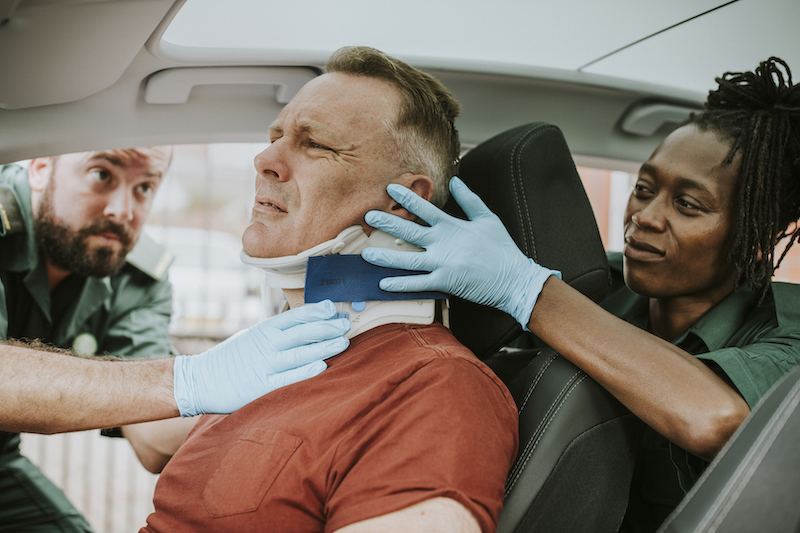
With the vast majority of New Jersey households owning at least one car, and the remaining households utilizing public transportation and livery services, the number of vehicles on the roads in New Jersey are increasing. Combining those facts with the national rise in car accidents, Northern New Jersey drivers face an ever increasing risk of being involved in a vehicular collision or crash, whether driving on the highways or winding roads. And when such incidents occur, they can result in a wide range of injuries, from slight to catastrophic. At Moon & Associates, we believe it is important for clients to be informed about the types of injuries that commonly result from car accidents in Northern New Jersey so that they can make the best informed decisions concerning their legal rights and remedies and obtain the appropriate and necessary medical treatment as quickly as possible.

Some of the more common injuries include:
- Whiplash: Soft tissue injuries that affect the neck and occur when the neck suddenly moves backward and forward. The tendons, muscles, nerves, and discs of the neck may all be involved in the injury. Whiplash can cause pain, stiffness, and limited range of motion in the neck, shoulders, and upper back. Typically, whiplash may occur when you’ve been rear ended by another vehicle or have to slam on the brakes suddenly to avoid another vehicle.
- Spinal Cord Injuries: Spinal cord injuries may be caused by trauma to the cells in the spinal cord or by severing nerve tracts (“SCI’s”). SCI’s are most commonly caused by cord contusion, bruising and compression. Spinal cord injuries may result in paralysis, numbness, muscle spasms, sensitivity and chronic or temporary pain.
- Head Injuries: These can range from mild concussions resulting from hitting a hard surface in a vehicle’s interior to severe traumatic brain injuries (“TBI’s”). Closed brain injuries can occur when rapid motion shakes the brain within the skull. This may lead to bruising and tearing of brain tissue and blood vessels and can lead to a primary or secondary brain injury depending on the extent of the trauma. Primary injury occurs when damage to the brain is more or less complete at the time of the impact, while secondary injury refers to changes that occur over a period of time which leads to further degeneration of brain tissue.
- Facial injuries: Facial injuries can be caused by the impact of the airbag or from hitting hard surfaces inside the car. These can include cuts, burns, bruises, fractures, and disfiguration. Scars and disfigurement can permanently alter an individual’s physical appearance necessitating plastic surgery and can often have psychological consequences.
- Chest Injuries: Chest injuries may result from the impact of the seat belt, airbag deployment or steering wheel on the body. Use and/or deployment of the seat belts and airbags, at times, may cause minor damage. Trauma to the chest can cause bruising and internal muscle tears and bleeding that are not readily apparent. More immediate injuries can include broken ribs, collapsed lungs, and internal organ damage.
- Arm Injuries: A wide variety of arm injuries may result from vehicular accidents, including fractures, burns, lacerations and muscle tears. Arm injuries often arise from airbag deployment or from the impact of hitting hard surfaces inside the car. Untreated arm injuries can cause temporary or permanent impairment and/or chronic pain and may be debilitating
- Leg Injuries: Leg injuries can arise from collisions with the dashboard or from being crushed between the car and another object. These injuries can include fractures, dislocations, and hyperextended or torn ligaments, muscles and tendons. Serious fractures may require surgery, the insertion of non-organic materials, such as metal screws and pins, and result in extensive rehabilitation.
- Knee Injuries: Knee injuries can occur during an accident, such as a rear end hit, a side impact or a rollover, when the knee impacts hard surfaces inside the car or when it is twisted or contorted. While some knee injuries may result in soft tissue damage to the ligaments, tendons, muscles and joints, they can also result in broken bones or fractures, dislocation, hyperextension, sprains and strains. These injuries also may require surgery and extensive rehabilitation.
- Shoulder Injuries: Although shoulders are very flexible joints, they are susceptible to injuries such as rotator cuff tears, fractures, and dislocations resulting from impact with hard surfaces at high speed. Shoulder injuries and impairment may be debilitating as they can severely restrict range of motion and restrict one’s ability to perform simple daily tasks such as reaching up to open a cabinet or drying one’s hair after a shower.
- Psychological injuries: Car accidents also can result in psychological trauma which may manifest itself immediately or over time, and result in physical symptoms such as heart palpitations and sweating and/or emotional symptoms such as fear, anxiety, anger and sadness. In some cases, these challenges may lead to post traumatic stress disorder (“PTSD”),requiring mental health treatment and counseling and even medication.
- Hand Injuries: Injuries to the hand include fractures, burns, soft tissue damage, torn ligaments and joint dislocations, which can range in severity from temporary or permanent impairment to lacerations and sprains. Injuries to the hand may also require surgery, immobilization and lengthy rehabilitation. Hand injuries can stem from various sources, including airbag deployment and impact with a hard surface.
- Foot and Ankle Injuries: In the act of bracing yourself for a car accident, your foot and ankle may receive the full force of pressure from the impact. Each of your feet contains 26 bones along with a myriad of joints, muscles, tendons, ligaments and soft tissue. Foot and ankle injuries, including fractured bones, torn ligaments, ruptured tendons and puncture wounds may require surgery, immobilization, and significant rehabilitation in order to restore mobility, correct your gait, and address chronic pain.
- Hip Injuries: Hip dislocations are often caused by the knee being slammed into the dashboard which causes a displacement of the hip. Hip dislocations, sprains/strains and fractures can cause pain, swelling, inflammation and decreased range of motion. Activity modification, physical therapy, steroid and anti-inflammatory medications are non surgical treatment options that can address minor complaints. However, more severe injuries, such as fractured hips, often require surgical intervention to reduce and fixate a fracture and restore mobility.
- Internal Injuries: High impact collisions that subject the body to extreme forces can lead to organ perforations, such as the liver, kidney or spleen. The dangers of organ damage are profound, as they come with the potential for severe complications such as internal bleeding, permanent organ damage and/or loss of organ function.
- Burn injuries: Thermal, chemical and electrical burns are common types of burn injuries caused by exposure to heat, fire, gasoline or battery acid. Burn injuries can occur when the car catches fire, from skin rubbing against the seatbelt, and from exposure to extremely hot metal inside the car. If untreated, burn injuries can lead to severe complications including infection, dehydration, permanent scars, amputation and even death. Skin surgery and grafting may even be necessary to prevent nerve tissue damage.
- Soft Tissue Injuries: Often referred to as invisible injuries, soft tissue injuries like sprains, strains, contusions, tendinitis and bursitis may have a delayed onset. Typical treatment is confined to the “RICE” method – rest, ice, compression and elevation. Severe injuries may require chiropractic treatment or physical therapy and rehabilitation. In some cases, invasive treatments, such as injections or surgery, may be necessary to alleviate pain, swelling and stiffness.
- Death: In some cases, car accidents can lead to the death of one or more individuals involved in the accident.
If you or someone you know has been injured in a car accident in Northern New Jersey, it is important to seek medical attention immediately and then contact an experienced car accident attorney. At Moon & Associates, we have the knowledge and experience to assist you in recovering the compensation you deserve for your injuries and damages. We stand ready to help you. Contact us today at (201) 430-7069 for a free consultation and let us help you get your life back on track.